
Where to Put a Cat Litter Box at Home
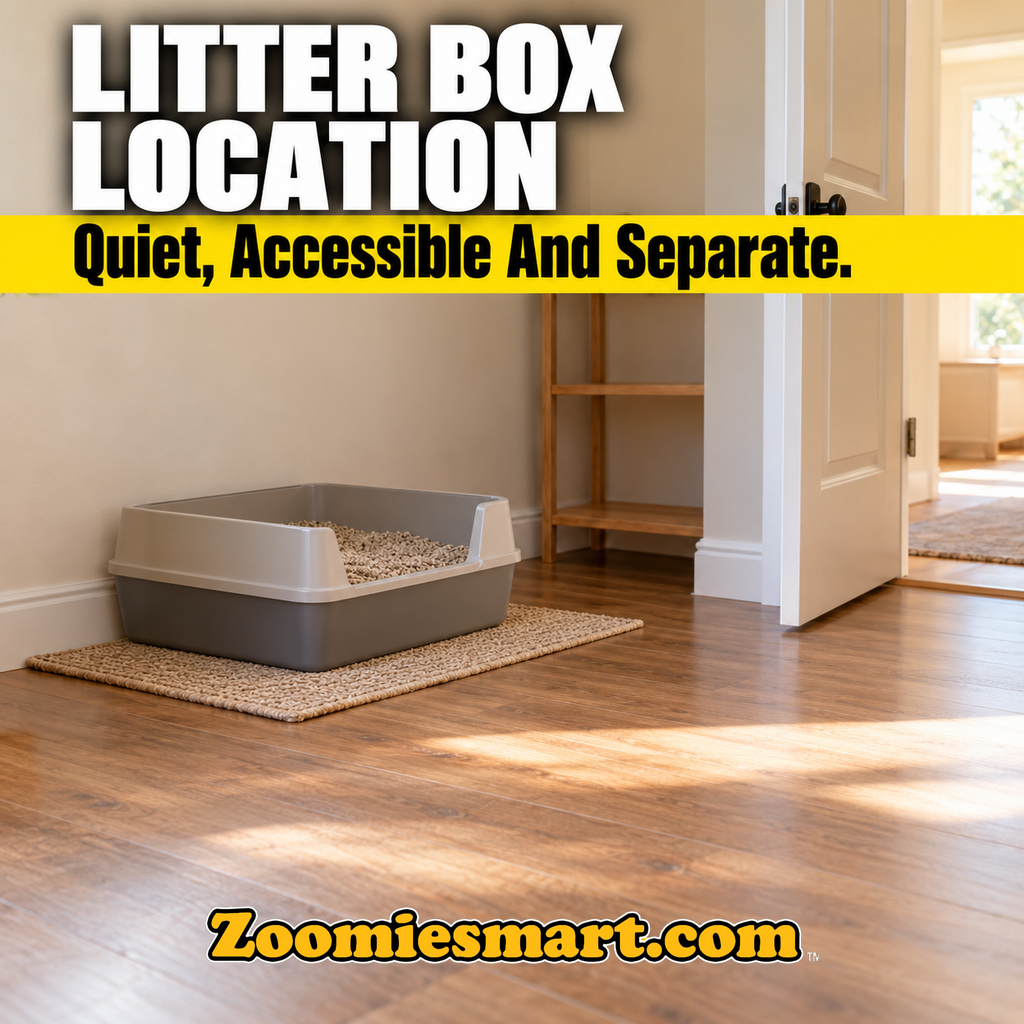
A useful litter-box location is quiet, accessible and separate from your cat's food, water and resting area. Start with those needs rather than the spot that hides the box most neatly. Cats Protection recommends private locations away from busy doorways and noisy appliances. Cats Protection litter-tray guidance
Use this guide to compare everyday locations before moving furniture or buying an enclosure. It is a household setup checklist, not a treatment for a cat who has started toileting differently.
Check the room during an ordinary day
List two or three possible spots, then visit each during the morning rush, household chores and bedtime. A spare room can be quiet at noon but closed overnight. A laundry corner can look peaceful while the machines are off.
For each location, write down what actually happens there. Include opening doors, rolling chairs, visiting children and pets passing through. Measure the space for the whole tray, with enough surrounding room to reach it and lift it out for cleaning. A tray that fits only when a cabinet is shut is worth reconsidering.
Compare the places you have
A spare room or home office: consider a spot outside the chair's rolling area and the door's swing. Check whether someone closes the room for calls or overnight. Tell everyone in the household which access route must remain available.
A bathroom: it may be workable if access is reliable. Think through showers, guests and closed doors, not just the hours when you are home alone. Keep the tray out of splash areas and leave space for your normal cleaning routine.
A utility room: listen while the washer and dryer run. Battersea specifically warns that sudden appliance noise and vibration can make these rooms unsuitable. It also advises avoiding exposed positions beside large windows where outside cats can look in. Battersea placement advice
A living-area edge in a small home: look beyond the most visible empty corner. Sketch where chairs move and where people carry bags or laundry. Moving a small table may create a more usable location than squeezing the tray behind it. Keep the cat's feeding and resting areas separate rather than combining every pet item into one station.
There is no room name that automatically makes a good choice. Pick the location whose everyday use works with the tray, then check it again when routines change.
Spread boxes out rather than lining them up
Cats Protection recommends one litter tray per cat plus one extra, in different locations rather than a row. For two cats, that starting point is three trays. Cats Protection on tray numbers and placement
Mark each tray on your room sketch. If every route leads through the same doorway, note that limitation. Do not count three trays in one utility room as three genuinely different location choices. In a small apartment, compare separate parts of the home rather than assuming you need three spare rooms.
Make access work for the cat you have
Consider the trip to the tray as well as the tray itself. Cats Protection recommends low-sided trays for older cats and keeping essential resources on one floor when stairs are difficult. Those resources should still have separate places, rather than being crowded together. Ask your veterinarian about an appropriate setup if your cat struggles to step in or reach the area. Cats Protection older-cat access advice
Before choosing decorative furniture, check the actual entry route and cleaning access. Do not assume a cupboard or enclosure suits your cat because it conceals the tray from people.
Keep a working setup consistent
If your cat already uses a suitable location reliably, there is no need to move it for appearance alone. When a change is necessary, plan it rather than shifting the tray between rooms each day. Cats Protection recommends gradual changes to the tray, litter and location. Caring for your cat guide
Keep a short note of the date, the change and what you observe. Record facts such as “door shut during guest visit” rather than deciding the cat is being difficult. Share useful observations with your veterinarian if problems develop.
Know when rearranging the room is not enough
Contact your veterinarian about a change in toileting rather than assuming the location is the only cause. Never punish your cat for accidents. Battersea toileting advice
Straining to urinate while producing little or no urine needs immediate veterinary attention. A urinary blockage is an emergency; do not wait to see whether a different tray helps. Cornell feline urinary guidance
Your final location checklist
- The route stays available during the household's normal routine.
- Doors, chairs and appliances have been checked in use.
- Food, water and resting spaces are elsewhere.
- Additional trays provide separate location choices.
- The cat can reach and enter the tray comfortably.
- Someone can scoop and remove it without dismantling the room.
Keep the room sketch with your household notes. Revisit it after furniture moves, new pets or a change in your cat's mobility.