
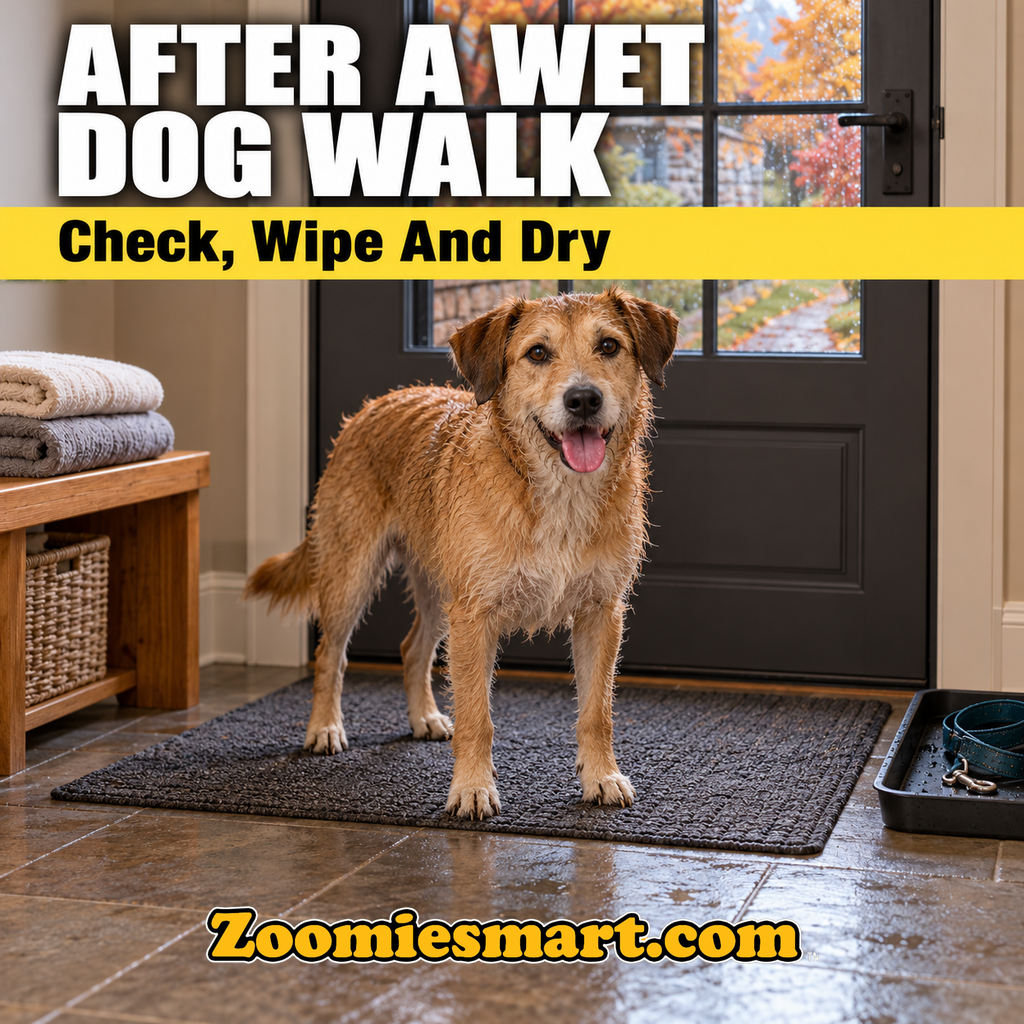
A Wet Fall Dog Walk Cleanup Routine for Your Entryway
Wet leaves, muddy feet and a dripping leash can turn the end of a fall walk into a scramble. Set up the return trip before you leave: a stable place to stand, a clean cloth within reach and a separate place for wet gear.
This routine is for ordinary rain and surface mud on an otherwise comfortable dog. It is not a treatment for sore paws or a replacement for veterinary instructions. Work at your dog's pace; finishing all four feet matters less than noticing when handling needs to stop.
Set up a wet side and a dry side
Choose a spot inside the door where you can close it completely without stepping over your dog. Lay down a washable, non-slip mat that stays flat. A loose towel on a slippery floor is not a stable standing surface.
Put a soft damp cloth and a dry towel within reach. Keep a second clean towel nearby for a very wet walk. Use supplies you already own rather than building a large grooming station.
Give dripping leashes, coats and your shoes a separate landing place. Keep wet gear away from the clean towels. In a small apartment, the two areas can be opposite ends of one mat, with gear moved to a drying spot afterward.
Come inside before starting the cleanup
Bring your dog fully indoors and shut the exterior door before unfastening walking equipment. Remove wet outdoor clothing once your dog is safely inside. Do not tether them to a hook or furniture to hold them still for wiping.
Pause while they settle into a comfortable position. Keep other pets and excited greetings out of the immediate workspace. If your dog needs to move, let them reposition rather than pulling a leg into reach.
Check the route from the mat to their usual resting place. Moving a rug or clearing a bag now is easier than steering a wet dog around it with a towel in one hand.
Check each paw before wiping
Look for surface mud and loose leaves, then inspect the pads and spaces between the toes only as far as your dog comfortably allows. Lift one foot at a time, briefly, without twisting the leg or forcing the toes apart.
Stop if you see a wound, bleeding or swelling, or your dog appears painful or starts limping. Contact your veterinarian for advice. Do not dig out an embedded object. These are reasons to move beyond routine cleaning, as described in VCA's paw injury guidance.
Wipe or rinse the dirty areas and then dry
Use the damp cloth to lift ordinary surface dirt, switching to a clean part as it becomes muddy. If wiping would mean scrubbing, gently rinse the dirty area with lukewarm water instead. Check the temperature yourself first and use fresh water when it becomes dirty.
If your fall route has already been treated with road salt, rinsing matters. VCA recommends a lukewarm-water rinse followed by towel drying after known salt exposure. Keep this a targeted cleanup, not an automatic full bath after every walk.
Blot each paw with the dry towel, including accessible spaces between the toes. Gently dry wet legs and the underside of the body too. Battersea advises checking and drying paws and drying wet, muddy dogs after walks. Move your dog to a warm, dry resting area when you finish.
Possible chemical exposure needs a different response. If you suspect your dog has licked antifreeze, contact your veterinarian immediately rather than completing this checklist or waiting for symptoms. PDSA identifies this as urgent.
Make handling easier on a dry day
Practice when no mud needs removing. Briefly touch a paw with a towel, give a suitable reward, then stop. Build up gradually only while your dog remains comfortable.
Pasadena Humane's handling guidance recommends small, rewarded steps and stopping when a dog moves away, stiffens or growls. Do not use food to keep a worried dog occupied while you continue unwanted handling. Ask your vet about new sensitivity and seek qualified, reward-based training help if routine handling remains difficult.
Reset the entryway before the next outing
Hang wet gear to dry according to its care instructions. Separate used cloths from clean ones, wash them as needed and let everything dry fully before storing it. Dry the floor and replace a saturated mat rather than leaving a slippery patch for the next person.
For broader storage ideas, see our organized dog space guide. Keep the everyday setup small enough to reset after an ordinary walk.
Your return home checklist
- Exterior door closed before walking equipment comes off.
- Stable mat and clean towels within reach.
- Paws checked without forced handling.
- Surface dirt removed; salt rinsed off if present.
- Paws and wet body areas dried comfortably.
- Pain, injury or suspected chemical exposure referred to the vet.
- Wet gear separated and floor left dry.
Leave the next clean towel where you will actually reach for it. That small reset is what makes the routine usable tomorrow.