
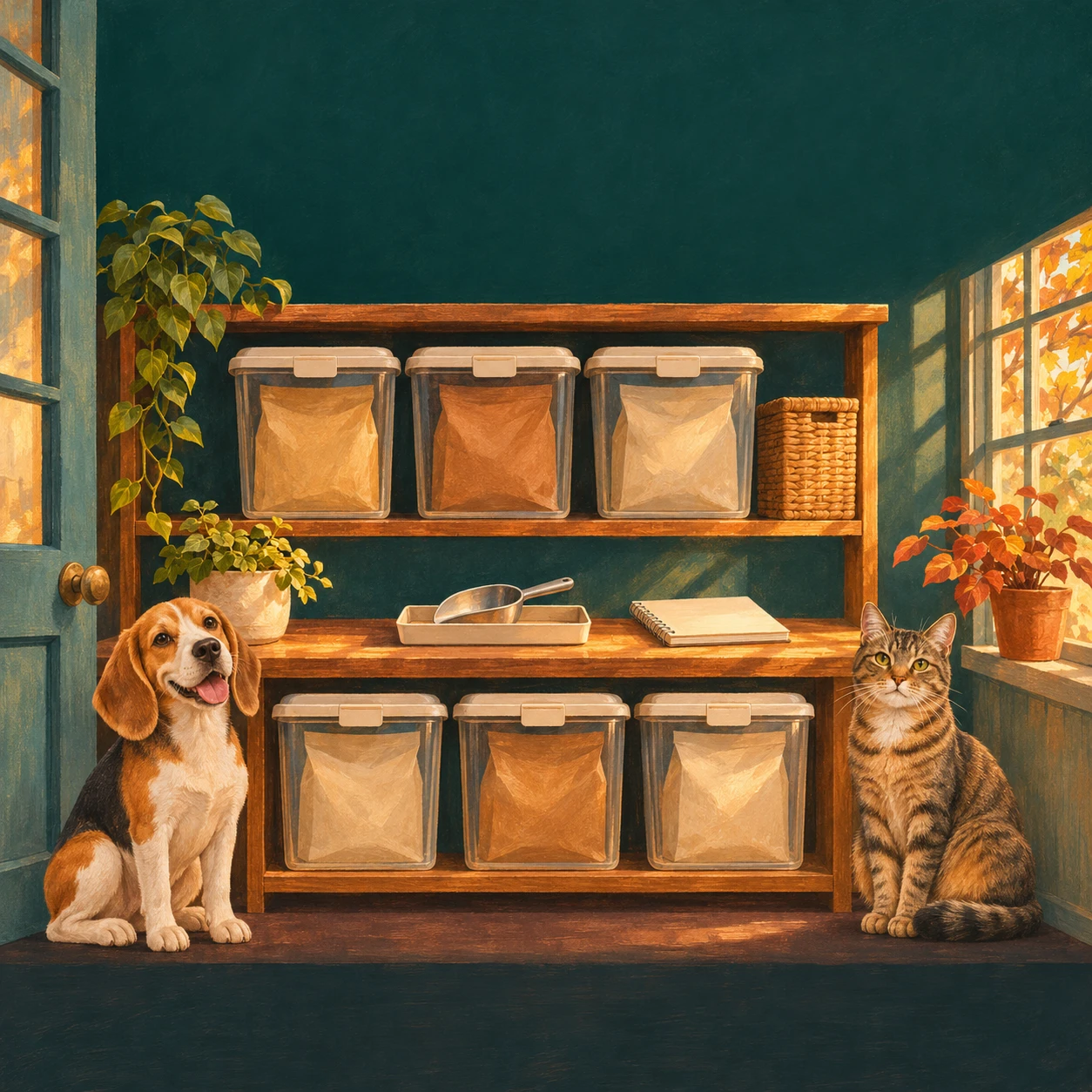

A pet-food shelf can look tidy and still be awkward to use. The bag is hidden, the scoop has wandered off, and nobody is quite sure whether the cat has already had dinner. Before holiday guests or a pet sitter join the routine, give the feeding station a practical reset.
The goal is simple: keep food stored as its maker directs, keep the information you may need later, and make your pet’s normal feeding routine easier for another person to follow. This is an organization guide, not advice to change your pet’s food or portions.
1. Keep the bag and its information together
Start by reading the storage directions on the food’s packaging. The FDA recommends keeping dry pet food in its original bag. If you use a storage bin, put the whole bag inside it when practical. That keeps the product name, lot number and best-by date with the food.
If you prefer to pour food into a separate container, save the package information in a clearly labeled spot beside it. Replace those details when you open a new bag. A photo can be a handy backup, but it should show the actual package currently in use, including the lot information, rather than a generic product picture.
Try this: Give each pet’s food a named place. Keep similar-looking bags distinct so a helpful guest does not reach for the wrong one.
2. Finish one bag before mixing in another
It is tempting to top off a nearly empty bin. A cleaner reset is to finish the current bag, wash and thoroughly dry the container, then start the next one. The FDA advises cleaning storage containers between bags. Keeping lots separate also makes it easier to identify exactly which food you are using if a recall is announced.
Do not use appearance alone to decide whether food is suitable. Check its package directions and dates. If the package is damaged or the food seems unusual, set it aside while you ask the manufacturer or your veterinarian what to do.
3. Make the storage spot work for the food
Choose a cool, dry place and keep food and treats secured from pets. Avoid a spot beside a heat source or one that becomes damp. Follow the label’s instructions for opened food, including refrigeration where required. Unused opened canned or pouch food needs prompt attention rather than sitting out while the kitchen is busy.
Put the “open” bag at the front and unopened supplies behind it. Do not make a display so elaborate that the person feeding your pet cannot find the instructions. A closed cupboard or secure container is more useful than decorative jars with no identifying information.
4. Give the scoop its own home
The FDA advises using a clean, dedicated scoop rather than the pet’s bowl to take food from a bag or container. Pick a washable resting place for it and include the scoop in your cleaning routine. Wash your hands before and after handling pet food, as the CDC recommends.
A small tray can separate clean feeding tools from spare leads, keys and other entryway clutter. Let washed items dry before putting them away. Do not hide the cleaning supplies so well that the next person cannot find them.
5. Leave a short handover, not a wall of instructions
Write down the pet’s name, the correct food, the usual amount and timing, and who is responsible for each meal. Use the instructions you already follow, including any veterinarian-prescribed diet. This article cannot determine an appropriate portion or diet for your pet.
For a shared household, a simple “fed” check beside each meal helps everyone see what has happened. Ask guests to check with you before offering treats or leftovers. If someone is covering a meal, show them the storage area once rather than assuming a label explains everything.
A final shelf check
- The current food and its original package details stay together.
- The storage location and handling match the label.
- Bins and feeding tools are clean and dry before reuse.
- Other people know which food belongs to which pet.
- The next meal has one clearly responsible person.
If you notice a possible food problem or your pet becomes ill, contact your veterinarian. Check the manufacturer and the FDA’s animal-product recall notices rather than relying on an old social post.
A good reset is the one you can keep using. You do not need matching containers or a new feeding system. Clear package information, sensible storage and a routine everyone understands are the useful parts.
Sources and further reading
- FDA: Proper Storage of Pet Food & Treats
- FDA: Tips for Safe Handling of Pet Food and Treats
- CDC: About Pet Food Safety
Sources checked November 6, 2026. This is general household guidance. Follow your food’s label and your veterinarian’s advice for your pet. Cover artwork is an original illustration, not a product photograph.