
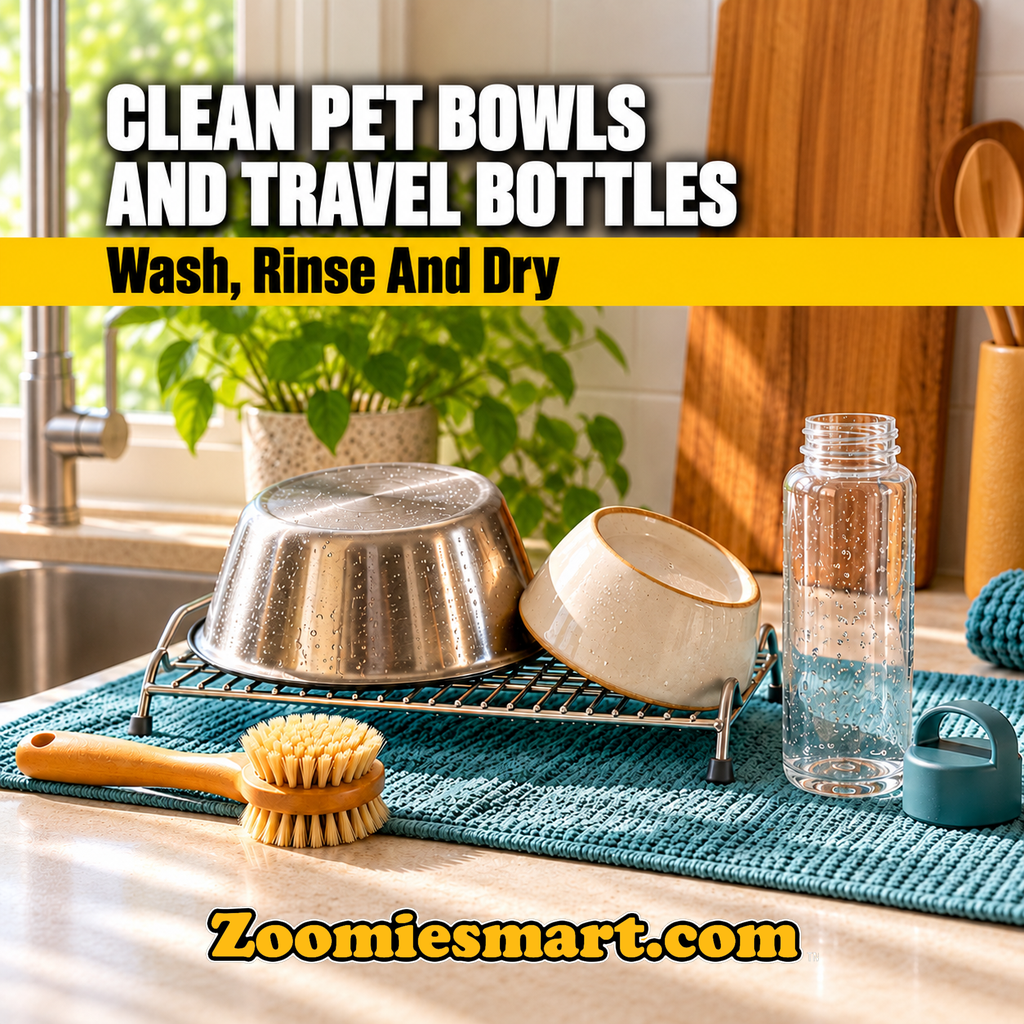
How to Clean Pet Bowls and Travel Bottles Between Outings
The walk is over, the carrier is unpacked, and the travel bowl is still in the bag. Before it goes back beside the leash, give the drinking kit its own reset. A quick rinse at the park is useful for removing loose debris, but it is not the same job as washing the equipment at home.
This routine is for dog and cat bowls and reusable pet drinking bottles. Your item's care instructions come first, especially for valves, seals, filters and insulated or electronic parts.
Start with a cleaning plan, not a guess about the material
Find the packaging or manufacturer's care page. Write down which pieces can come apart, how each should be washed, and whether any part must stay out of water. A bottle body, lid and drinking tray may have different care requirements. Do not assume that a silicone-looking bowl or a metal-looking bottle is dishwasher-safe.
If the instructions are missing, ask the seller or manufacturer for the exact model's guidance. Until you know how to clean a complicated dispenser properly, use a simpler bowl with clear care instructions. Do not pry out a fixed valve or gasket to make the cleaning easier.
Give food and water bowls a regular place in the washing-up
CDC's example schedule calls for washing wet-food bowls after each use, and dry-food and water bowls daily. Clean sooner when an item is dirty. FDA recommends washing food bowls and scooping utensils after each use, so making that your mealtime habit is a straightforward option. CDC pet-supply guidance · FDA food-handling guidance
For travel gear, attach the job to unpacking rather than the next departure. Put the used kit in a designated washing spot and the clean spare back in the travel bag. This also works for a cat's bowl after a veterinary visit or overnight stay.
The return-home reset
- Empty and inventory. Discard leftover drinking water and food. Set the bottle, bowl, lid and permitted removable pieces together so nothing disappears into the bag or sink.
- Open only what the instructions allow. Lay the parts out in order. For a multi-part bottle, a quick photo before disassembly can help you put it back together correctly.
- Wash, scrub, rinse and dry. CDC's basic handwashing method uses soap or detergent and warm water, a sponge or brush, a water rinse, then air-drying or a clean towel. Use the item's care instructions to decide which surfaces and components can receive that treatment. CDC cleaning method
- Look into the awkward spots. Check the bowl's rim and folds, the bottle neck and lid threads, and any user-accessible drinking channel. Is there a patch you cannot reach? Check the care guide instead of improvising with sharp tools.
- Keep the drying pieces together. Choose a clean spot where pets cannot pick up small components. Do not put the kit straight back into its closed carrying pouch while it is still wet.
- Reassemble and check. Follow the assembly instructions, then check that the lid closes and the dispenser works before packing it. If a seal is missing or a part no longer fits, set the item aside.
Wash your hands before and after handling pet food and treats. Keep a separate food scoop rather than using the feeding bowl to dig into the bag. FDA handling tips
What if you are still away from home?
Pack enough clean drinking equipment for the trip and identify somewhere you can wash it properly. A spare bowl is especially useful when the first one lands in mud or you cannot complete its cleaning routine at a stop.
Keep a small “used kit” pouch separate from your ready-to-use items. Treat it as temporary transport, not storage for the next outing. Once home, empty it along with the bowls. If the pouch itself needs cleaning, follow its own label.
For a shared dog-and-cat household, label the travel kits if their parts look similar. A lid that appears to fit is not a substitute for the correct lid.
Dishwasher or disinfectant?
Use a dishwasher only for parts identified as dishwasher-safe. Disinfection is a separate step from routine cleaning; illness or a higher-risk household can change what is needed. Ask your veterinarian about an appropriate routine, and follow the disinfectant label and item-care instructions. Keep pets away during use. Never mix bleach with other cleaners. For cats, avoid disinfectants containing phenol. CDC cleaning and disinfection precautions
There is no universal disinfectant recipe in this checklist because equipment and circumstances differ.
The ready-to-pack check
Before the next outing, ask:
- Is every required part present, clean and dry?
- Have I checked the folds, lid and drinking opening?
- Does the assembled kit work as intended?
- Is the fresh water ready, along with a clean spare bowl when needed?
If residue remains where you cannot clean it, or a part is cracked, damaged or missing, take that item out of the ready-to-use kit and contact the manufacturer about cleaning or replacement. A smaller collection you can maintain is more useful than a bag full of equipment whose condition you cannot check.