
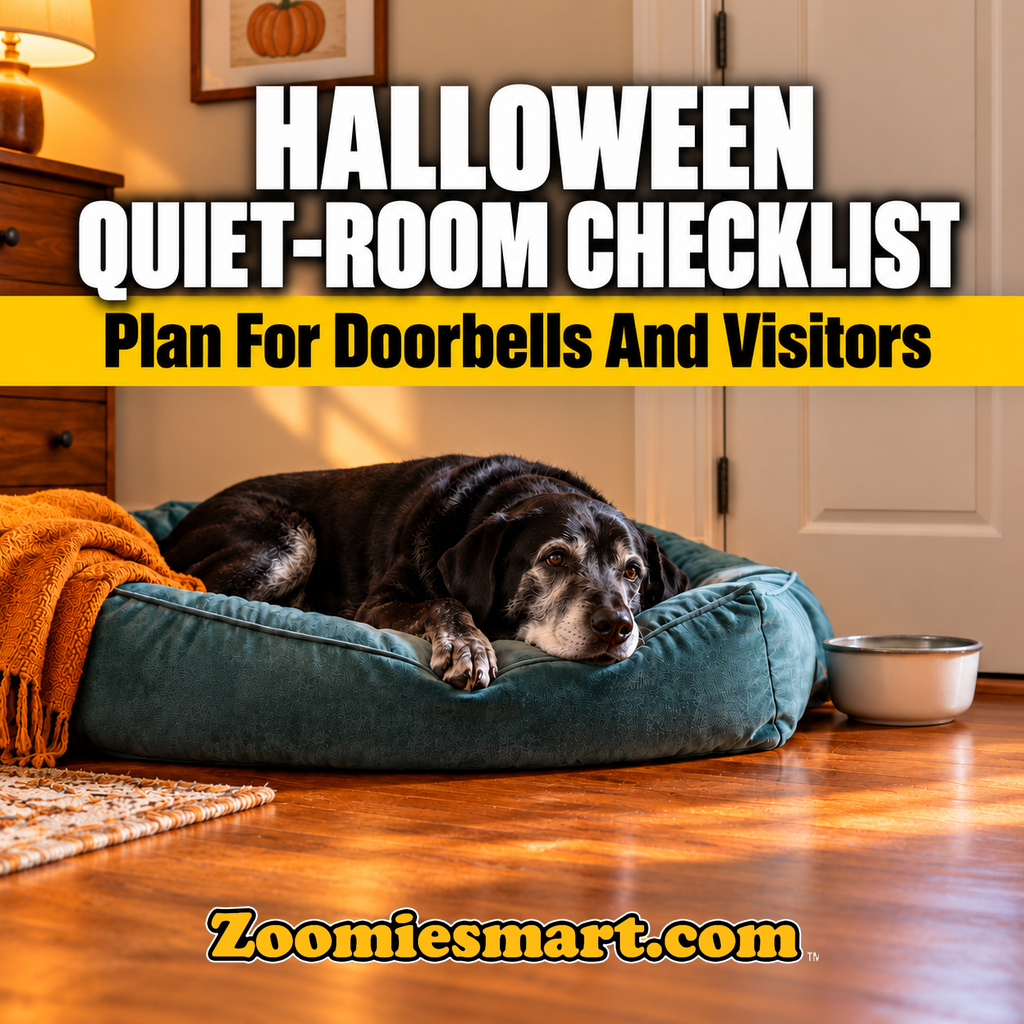
Halloween Doorbell Routine for Dogs and Cats: A Quiet-Room Checklist
One knock, a group of excited children, another ring before you have closed the door: Halloween can turn a familiar entrance into the busiest spot in the house.
Give your pet a different place to spend the evening. A familiar room away from arriving visitors can make the night easier to manage, with fewer opportunities to slip outside. The ASPCA recommends a separate, comfortable room away from the front door for pets who may find the activity stressful. ASPCA Halloween safety tips
You do not need a themed bed or a basket of new toys. Start with what your dog or cat already uses comfortably, then make a plan everyone in the household can follow.
Before Halloween: choose the room and the backup plan
Pick a room your pet knows, away from the entrance and street-facing commotion where possible. Check that windows and doors close securely. A guest bedroom is only useful if visitors will not keep walking in to collect coats.
Spend some ordinary, quiet time there together before the event. Notice whether your pet can settle with the arrangement you intend to use. Halloween evening is a poor moment to introduce unfamiliar confinement.
If being separated makes things worse, change the plan. Arrange for a familiar adult to stay with your pet, or skip answering the door. A sign asking visitors not to knock can be more useful than trying to manage repeated greetings. AAHA suggests avoiding trick-or-treating at the house when approaching strangers upset a pet; discuss anticipated serious distress with your veterinarian ahead of time. AAHA Halloween safety guidance
Set up the quiet room
For either pet
- Bring in their familiar bed or resting blanket and fresh drinking water.
- Remove candy, wrappers, costume accessories, loose decorations and accessible electrical cords. Keep lit candles out of the space entirely.
- Keep the room comfortably ventilated without leaving an escape route open.
- If you use familiar background music or TV, keep it low. Turning the volume up to compete with every doorbell adds more noise.
- Put a simple sign on the door: “Pet resting. Please keep this door closed and ask before entering.”
Halloween decorations and sweets need their own inaccessible storage, not a spot beside the pet’s bed. Chocolate can harm dogs and cats, and xylitol-containing sweets are particularly dangerous for dogs. If you think your pet has swallowed something hazardous, contact your veterinarian immediately. ASPCA safety guidance
Add these for a cat
Provide a litter tray in a private position away from food and water. Include an accessible hiding place, such as an open cardboard box, plus a familiar scratching option if practical. Place food and water separately. These are ordinary room essentials, consistent with Cats Protection’s guidance for setting up a cat’s space. Cats Protection room setup
Keep your cat indoors for the evening and check their microchip contact details beforehand. Do not pull them out of hiding to meet guests or take a photo. Cats Protection specifically recommends a peaceful room and hiding place for Halloween visitors, and advises against dressing cats in costumes. Cats Protection Halloween advice
Add these for a dog
Plan the usual walk and toilet opportunity before the busiest period; daylight may help you avoid costumed crowds. Keep meals and the rest of the routine familiar. Blue Cross recommends preparing activities in advance and choosing a resting space away from the front door or windows. Blue Cross Halloween advice
If you offer a familiar food toy, follow its supervision instructions. Do not leave a new chew or toy with your dog and assume it is suitable unattended. A crate is an option only if your dog is already comfortable using it; it is not a required Halloween purchase.
Give the household two clear jobs
Door person: Handles visitors and keeps them out of the pet’s room.
Pet person: Checks on the pet, refreshes water and handles toilet needs while the exterior door is closed.
If you are doing both jobs, pause visitor greetings before opening the pet’s room. Make the sequence predictable: finish the greeting, close the outside door, then check on your pet. Tell children and guests who is handling each job so nobody “helpfully” opens both doors.
Do not rely on a loose doorway barrier that your pet can jump, climb or squeeze through. Keep pets away from the open entrance rather than asking them to greet a stream of unfamiliar costumes. AAHA highlights the escape risk from repeated door opening. AAHA escape-prevention advice
Keep this checklist by the candy bowl
- Pet settled in the planned space before the first visitors arrive.
- Water, bedding and cat litter access checked.
- Exterior doors, windows and household escape routes checked.
- Candy and decorations inaccessible to pets.
- Everyone knows who answers the door and who checks on the pet.
- Quiet-room sign in place; guests know not to enter.
- Backup plan ready if the arrangement is not working.
If your pet seems increasingly distressed, reduce the activity rather than continuing the evening unchanged. Stay with them if that helps and stop answering the door if needed. This checklist is household preparation, not treatment for noise fear or separation-related distress.
After the last knock
Close the outside door before reopening access to the rest of the home. Pick up dropped candy, wrappers and costume pieces first. Let your pet rejoin you at their own pace, then return to their normal evening routine.
Finally, jot down what helped and what did not: the room choice, the visitor traffic, whether someone needed to stay nearby. That small note gives you a better starting point for the next busy evening, whether it is Halloween, a birthday party or a house full of holiday guests.